
To make a better travel vlog, choose one story for the day, film a mix of wide shots and details, record clear speech and local sound, then edit around what changed or surprised you. A phone is enough to start. Consistent coverage and a clear point of view matter more than a complicated camera setup.
1. Give the trip a story before you film.
A travel vlog becomes easier to watch when the viewer knows what you are trying to do. “An afternoon exploring the waterfront” gives a loose setting. “Can we discover a quieter side of Dubai before sunset?” gives the same afternoon a question. You do not need to manufacture drama. A small decision, a discovery or a change of plan can carry the film.
Write three lines before leaving: where you are going, what you hope to find and why someone else might care. Capture a short introduction while that intention is fresh. At the end of the day, record what actually happened. Those two moments give the edit a beginning and an ending, even when the middle is spontaneous.
2. Film a five-shot sequence at each stop.
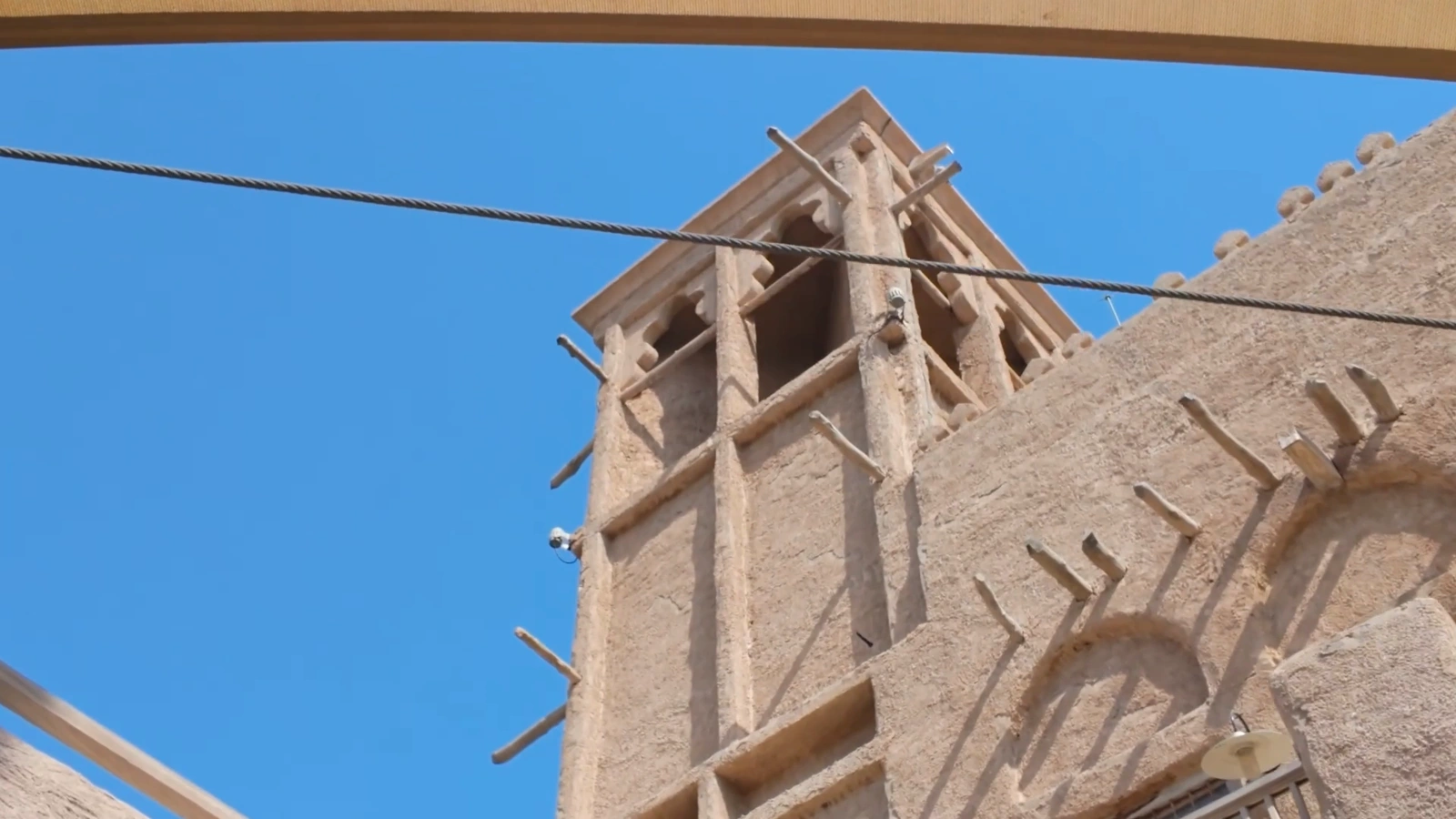
One sweeping shot of a landmark establishes the place, but rarely explains your experience of it. Build a small sequence instead. Show the surroundings, move closer to an activity, pick out a detail, include a human response and find a frame that lets the viewer leave the scene. The waterfront photograph above establishes a setting; an architectural detail gives the sequence a different scale.
Hold each composition for a few seconds before changing it. Give moving subjects room to enter and leave the frame. If you only collect fast pans, the edit has little room to breathe. A steady view of a boat passing can communicate movement without moving the camera at all.
- Wide: establish the street, landscape or room.
- Medium: show the activity within that place.
- Detail: record a texture, object or small action.
- Reaction: capture your response or a willing participant.
- Exit: film the walk, doorway or view that connects to the next stop.
3. Keep the camera setup consistent.
Clean the lens, check battery and storage, and record a short test before heading out. Choose an orientation that suits the intended film. A horizontal travel video and a vertical social cut need different compositions, so capture a few dedicated vertical shots if both are planned. Leave space around important subjects rather than assuming every wide image will crop successfully.
Use a consistent frame rate for ordinary footage and check exposure when moving between sun and shade. On a phone, lock focus and exposure where the camera allows it when a shot needs to stay stable. Slow motion is useful for a specific action, but a whole trip shown slowly can lose the feeling of being there.
4. Bring back the sound of the place.
A travel vlog can look polished and still feel distant if every location is covered by the same music track. Record short stretches of natural sound: footsteps, water, a train arriving or the room around you. These recordings help scenes connect and give the viewer information that images cannot provide.
For speech, find a quieter position and keep the microphone close enough to capture your voice clearly. Listen to a test recording through headphones before doing a long introduction. If the location is too loud, record a concise voiceover later. Describe what the viewer needs to understand rather than narrating every visible object.
5. Edit for discovery, then polish the picture.
Start by choosing the moments that explain the day. Arrange the introduction, the main stops and the conclusion before adding transitions or colour. Remove repeated views that do the same job. Keep an unexpected moment if it changes the story, even when its framing is less polished than the rest.
Balance speech, atmosphere and music so the words remain easy to follow. Match brightness and colour between neighbouring shots before applying a strong look. Watch the finished edit on a phone as well as a larger screen. Small text, sudden volume changes and overly dark scenes often become more obvious in that final check.
6. Help the right viewer find the vlog.
Choose a title that names the real destination and experience, such as a Dubai waterfront walk or a Ladakh road trip. Use a thumbnail from the film that supports that promise. A description can explain the route and link to useful chapters. Specific information gives a viewer a reason to click without promising an experience the film does not contain.
Add captions for spoken content and check names, places and timing yourself. YouTube provides tools for adding and editing subtitles and captions. Clear captions help viewers follow the story when listening is difficult. Keep a clean copy of the final film and back up the original clips before clearing space for the next trip.
Travel vlog questions, answered.
Can you make a good travel vlog with a phone? Yes. Stable framing, usable audio and enough varied shots can make a phone an effective starting point. Add equipment only when you can identify the problem it needs to solve.
How long should a travel vlog be? Keep it long enough to complete the story and short enough to avoid repetition. There is no single length that makes every trip interesting. Test the edit by asking whether each scene adds a place, an action or a useful observation.
Do you need to show your face? No. A sequence of places, activities and details can work with voiceover or carefully written on-screen context. The viewer still needs a sense of whose experience they are following.